
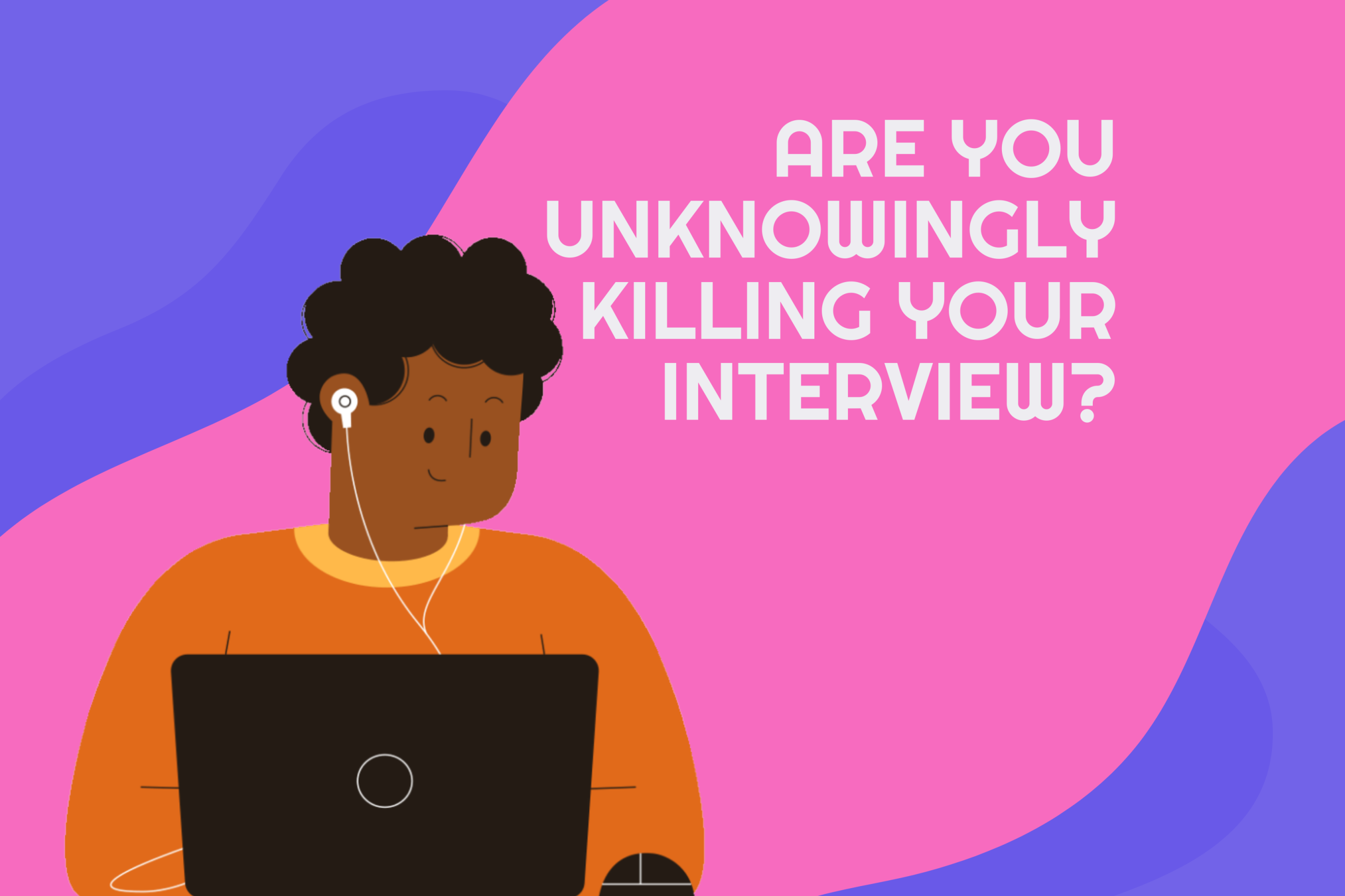
You walk out of an interview feeling good. You answered their questions, you were polite and you reckon you ticked the boxes. But then comes the all-too-familiar email, “Unfortunately….. ”
Sometimes it’s not just about whether you’re the right person for the job — it’s also about how you present yourself in the interview. Even highly skilled candidates can unknowingly make small mistakes that risk putting them out of the running.
The good news? These mistakes are completely avoidable. If you recognise them you can make sure your next interview truly reflects your potential.
So if you’ve been struggling to land that job offer ask yourself whether you are perhaps sabotaging your own interview? Here are some ways to help fix it:
-
Lose the clichés ….
Ever answered a question with something like: “I’m a highly motivated, hardworking individual with a passion for success.” ?
Sounds impressive, right? Wrong. It makes you sound like every other candidate!
The problem? Those phrases are empty, overused, and don’t tell the hiring manager anything about you.
Fix it: Skip the clichés and prove your value instead: Instead of saying, “I’m great at problem-solving,” try: “A key client was on the verge of walking away due to project delays. I stepped in, restructured the workflow, and made sure we delivered on time. Not only did we keep the client—we secured an additional contract with them.”
This doesn’t just say you’re good at problem-solving—it shows it. Hiring managers don’t want vague claims. They want proof that you can get results. When you show your skills in action, you become memorable.
-
You’re not ready for the unexpected ….
Most people prep for the standard ludicrous questions like “why do you want this job?” or “what are your strengths?”
But what happens when they throw you a curveball?
- “If you could have dinner with any famous person, who would it be?”
- “Do you consider yourself a hunter or a gatherer, and why?”
- “Tell me something surprising or interesting about yourself.”
These aren’t meant to trip you up, just designed to see how you think on your feet.
Fix it: Stay calm and engage with the question: Don’t panic or say, “I don’t know” Instead, talk through your thought process.” For example, if you are asked to estimate something random (like the tennis balls), say: “Well, I will start by estimating the size of the room, then compare it to a tennis ball…”
You don’t need the exact answer—they just want to see how you approach a problem.
-
You’re not asking the right questions ….
When an interviewer asks, “Do you have any questions for us?” it’s not just polite conversation—it’s a test. Saying “No, I think you covered everything” can make you seem uninterested whilst asking something too basic (like what exactly he company does) suggests you haven’t done your research.
Fix it: Ask questions that show you’ve thought deeply about the role: Rather than repeating what’s already been discussed, build on it. If they mention the company is expanding internationally, you might follow up with “That’s really interesting—how do you see this role evolving as the company grows?”
Smart, well-prepared questions don’t just impress hiring managers — they also help you decide if this is the right role for you.
-
You’re not following up ….
In the UK, following up after an interview isn’t exactly standard practice. But here’s why it should be. Most candidates don’t do it, which means the ones who do stand out.
A quick, thoughtful message keeps you fresh in the interviewer’s mind—and could be the difference between an offer and a rejection.
Fix it: Keep it short but personal: Instead of: “Thank you for your time” try: “I really enjoyed our chat about [topic]. It made me even more excited about this opportunity and I’d love to be part of [company’s goal or project]. I’m looking forward to what’s next!”
And here’s a secret: If you messed up an answer during the interview, this could be your chance to fix it…. “I’ve been thinking more about our discussion on [topic], and I wanted to share an additional thought on how I’d approach it…”
No one expects you to be perfect in an interview, but a follow-up shows that you care.
Deal clincher! Be the candidate they can’t ignore ….
Interviewing isn’t just about answering questions—it’s about balance. A mix of likeability, confidence, professionalism, personality, respect, and intelligence. Get that mix right and you won’t just be qualified for the job — you’ll be the person they remember.
✔ Skip the buzzwords and communicate naturally.
✔ Stay calm and think through unexpected questions.
✔ Use confident body language to reinforce what you’re saying.
✔ Ask thoughtful questions that make an impression.
✔ Follow up—it could be the one thing that sets you apart.
And don’t forget the small things. Poor body language or badmouthing a previous employer can undermine even the best answers. Confidence, professionalism, and respect go a long way in making the right impression.
The best candidates aren’t just qualified — they know how to showcase their value. Master the balance, own your strengths, and turn every interview into an opportunity to impress